
Electro-Powered Ticks?
Nature’s Invisible Forces As Vectors

Most people think ticks jump onto their host. i sure did.
Either that, or they fall from the trees.
FALSE!
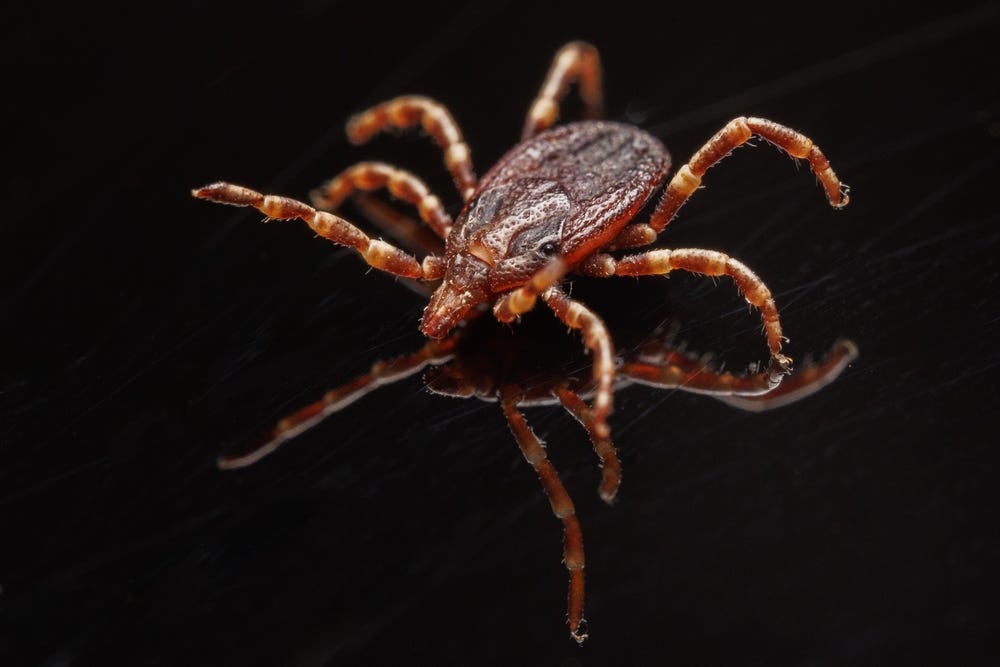
Ticks neither jump nor fall onto their prey.
They are pulled onto their hosts through electrostatic charge.
When i learned this, i audibly gasped.
This is the same vector that draws bees to their food source - but with a vastly different result!
Living things generate subtle electrical fields. Movement through the environment can amplify and exchange those charges. This is just ordinary physics.
Bodies carry - and constantly exchange - small electrical charges.
Ticks exploit this phenomenon.
Like dust stuck to your computer screen, or a balloon clinging to the wall, ticks are electrostatically attracted to a host before direct contact even occurs.
They do not need to leap. Electricity does the work. The field surrounds the host before the tick does.
As i explained in this past article, bees also rely upon electrostatic charge to find food sources and spread their goodness. But unlike ticks, bees are vectors for life’s abundance.
Bees accumulate positive charge as they fly. Flowers carry delicate negative electrical charge. Pollen then “jumps” across the electrical differential between flower and bee — an elegant biological exchange that supports pollination, fertility, biodiversity, and life itself.
With bees, an invisible energy field - static electricity - becomes their bridge to nourishing the planet.
Like bees, ticks are vectors carried by electrostatic charge.
But they accomplish something entirely different.
Ticks operate by an ingenious method of parasitic attachment instead, draining their host. They do not generate a charge in the same way that bees do when they fly.
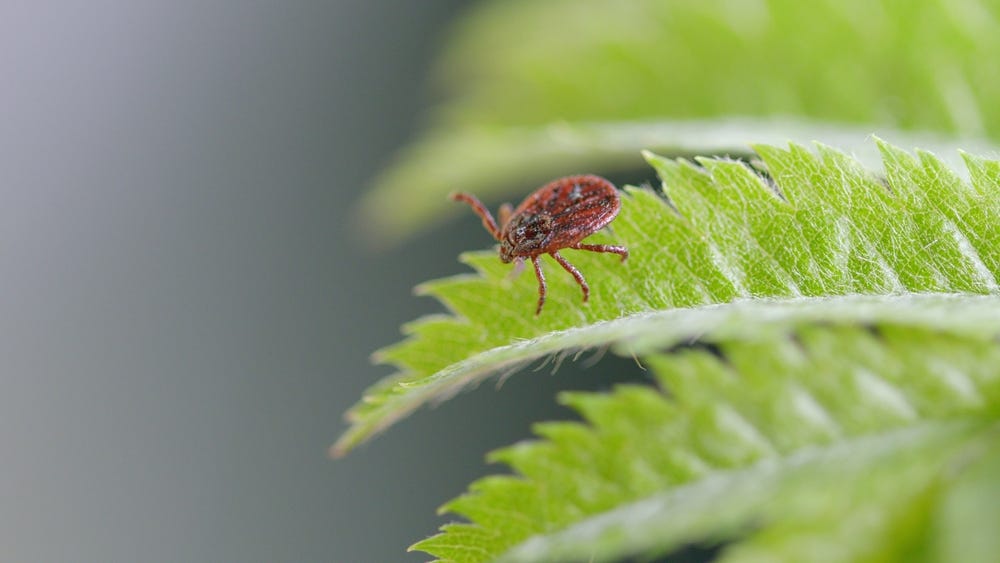
Ticks tune in to the electrostatic charge of their prey; and this induces what is called “an opposite charge distribution within the tick” that creates the attractive force.
(WOW! Who figured that one out?)
Once they land, they sense the terrain with their front legs and climb into position. Then their saw-like mouthparts (chelicerae) pierce and slice the skin, and they insert a barbed feeding needle (hypostome) that locks in place, drains their host’s blood; and injects pathogens into the tissue.
Ticks are vectors for disease.
THE FIELD BETWEEN US: VECTORS, & ELECTRICITY
So let’s return to our common themes: the sheer miracle of electrostatic charge in Nature; and how two vastly different species use this force to become vectors.
Modern humanity still struggles to grasp the premise that all life is electrical - we forever argue against the invisible.
But here’s the thing:
Biological relationship is electrical. Communication itself is electrical.
Our nervous system operates through electrical signaling.
Fascia conducts piezoelectric activity (electricity and light) throughout the body.
Cell membranes maintain electrical gradients moment by moment in order to function, communicate, and self-repair.
Even mitochondria depend on electro-chemical gradients to produce ATP - the energy that powers life.
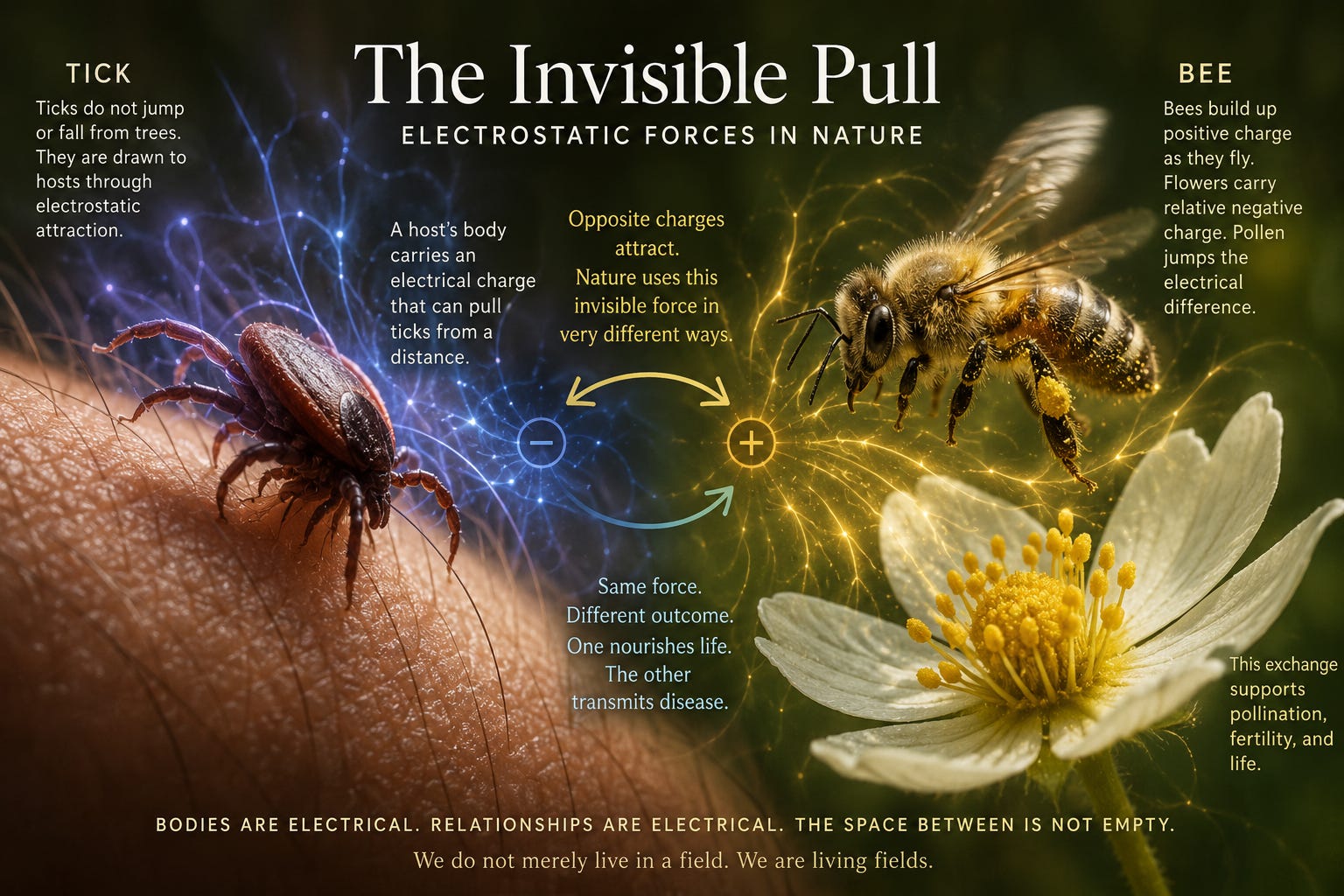
We do not merely live in a field.
We are living field ourselves.
Our body is not separate from the environment and observing it from a distance. Our body is continuously participating in energetic exchange with the world around it.
Some exchanges restore life. Others deplete it. But both reveal the same underlying truth:
Energy is essential to the realm of matter.
The invisible world is not imaginary. It is biological.
Everything is intertwined by living energies we cannot see.
And increasingly, science is catching up to what living systems have always obviously demonstrated.
The living world is not merely mechanical.
Bodies are electrical.
Relationships are electrical.
The space between us is not empty.
___________________________________
What are your thoughts about all this?
Thank you for reading along today! Thank you for sharing this substack with all your friends!
This is fascinating!! We are surrounded by deer in Western Pennsylvania and have a huge tick problem.
The ticks were falling not from trees but from the skies from helicopters and small 1 or 2 seat airplanes paid to drop them for Bill Gates in early spring 2026, according to the pilot of several of these aircraft. One of those pilots said he had been paid to drops ticks in previous years but at a much smaller scale than this year.